Deliberately Behind: Why Younger Fans Are Treating Old Fandoms Like an Act of Resistance
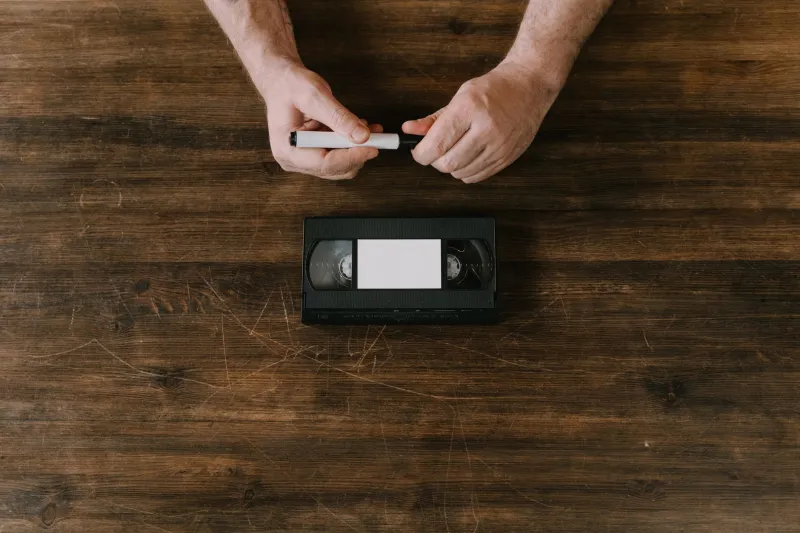
Let's get something out of the way first: nobody is discovering old anime or buying VHS tapes because they genuinely didn't know streaming existed. The 'stumbled upon it randomly' narrative is a polite fiction. What's actually happening — and it's happening loudly enough that you can see it on TikTok, of all places — is deliberate. Young fans are choosing older, algorithmically invisible fandoms with full awareness of what they're opting out of. And they're doing it specifically because of that awareness.
Call it retro fandom. Call it analog rebellion. Call it whatever fits your framework. But don't call it nostalgia in the traditional sense, because most of these fans weren't alive when these properties were new. This isn't about remembering something fondly. It's about choosing something that was never designed to harvest your attention or report your preferences back to a recommendation engine.
The Algorithm Is the Enemy, Actually
Here's the thing about algorithmic media consumption that doesn't get said plainly enough: it changes what you like. Not in some vague, philosophical way — in a measurable, documented way. Platforms optimize for engagement, which means they steer you toward content that provokes strong reactions. Over time, your taste becomes a product of that steering. You didn't choose your fandom so much as you were guided into it.
A growing number of younger fans have figured this out, and they find it deeply uncomfortable. The solution some of them have landed on is to deliberately sidestep the recommendation apparatus entirely by engaging with properties that predate it — or that exist so far outside the current content ecosystem that no algorithm bothers to surface them.
When you're deep in a fandom for a 1990s mecha series that hasn't had new content in twenty years, there's no studio tracking your watch time. There's no engagement metric being fed back to a recommendation system. There's no content roadmap being adjusted based on your behavior. The property is just... what it is. Finished. Complete. Yours to interpret without corporate interference.
That's not a bug. For these fans, it's the entire point.
Physical Media as Political Statement
The vinyl revival gets talked about a lot in music circles, and it's easy to dismiss as aesthetic posturing. But the parallel movement in film and TV fandom is worth taking more seriously than it usually gets.
Collecting DVDs, Blu-rays, and yes, actual VHS tapes of older properties isn't just about owning a physical object. It's about owning something that can't be quietly altered, removed from a platform, or made inaccessible by a licensing dispute. Streaming services have conditioned audiences to treat media access as inherently temporary — and for fans who've watched beloved shows disappear from platforms overnight, that lesson has landed hard.
The response, for a specific subset of younger fans, has been to opt out of the access model entirely. Physical media doesn't have a server somewhere that can be switched off. It doesn't require a subscription. It doesn't know who you are or what you watched before. The trade-off — you have to actually own the thing, store it, maintain it — is exactly the point. Ownership with friction is still ownership. Frictionless access that can be revoked isn't.
This is showing up in interesting ways in fan communities. Swap meets and trading networks for physical media have seen increased participation from people in their early twenties. Online groups dedicated to ripping and archiving discs have a noticeably younger membership base than you might expect. The knowledge transfer happening in these spaces — older fans teaching younger ones how to navigate pre-streaming media culture — has a weirdly intergenerational warmth to it.
Choosing Communities That Don't Want Anything From You
There's another dimension to this that's less about media format and more about community structure. Active fandoms for current properties exist in a complicated relationship with the corporate entities behind those properties. Studios monitor fan spaces. They hire social media managers to engage with fan communities. They seed information strategically. They use fan enthusiasm as free marketing and fan feedback as product research.
Fandoms for abandoned or completed properties don't have any of that. There's no studio watching the Discord. No PR team threading themselves into the conversation. No content drops designed to reactivate the community's engagement. The community exists entirely for its own purposes, because there's no commercial interest in keeping it spinning.
For young fans who have grown up inside the attention economy — who understand, viscerally, what it means to be a user whose engagement is the product — that absence of corporate interest feels like genuine freedom. You're not a demographic. You're not a data point. You're just a person who likes this thing.
What This Means for the Industry
Streaming platforms and studios have spent enormous resources building recommendation systems designed to surface new content and drive engagement with current releases. The implicit assumption is that relevance equals recency — that what fans want is what's newest, and that the platform's job is to efficiently deliver it.
The retro fandom movement is a direct challenge to that assumption. It suggests that a meaningful segment of younger audiences doesn't want to be guided toward relevance. They want to find their own way to things that matter to them, on their own timeline, without the recommendation apparatus deciding what they should care about next.
Whether that's a trend that scales or remains a niche phenomenon is genuinely unclear. But it's worth noting that the fandoms attracting this kind of deliberate, opt-in participation tend to be remarkably durable. When you choose something because you actually sought it out — rather than because an algorithm put it in front of you six times — you tend to stick with it. The engagement may be lower by platform metrics. The commitment runs considerably deeper.
The Defiance Underneath the Nostalgia
There's something almost poetic about the fact that the most visible space for this conversation is TikTok — a platform that represents perhaps the apex of algorithmic content delivery. Videos about 'escaping the algorithm' go viral on the algorithm. It's contradictory, and the fans who are living this tension are mostly aware of the contradiction and fine with it.
The goal was never purity. It was perspective. Choosing an old fandom, buying the DVD, joining the forum that hasn't been updated since 2011 — these aren't statements about rejecting technology entirely. They're statements about refusing to let technology be the only thing that decides what you love.
In a media landscape engineered to make you feel like you're constantly behind, choosing to be deliberately behind is its own kind of power move. The dark corners of fandom have always understood that the most interesting things are rarely the ones being promoted. Turns out, a whole generation of younger fans is starting to agree.